banner

Thursday, March 25, 2010

Susan's Favorite Bread Baking Tips—What Are Yours?
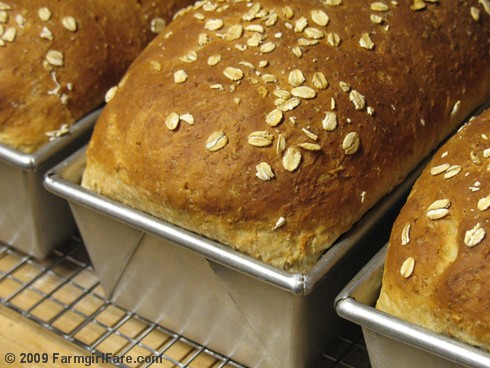
Freshly Baked Oatmeal Toasting Bread
Freshly Baked Oatmeal Toasting Bread (recipe here)

A few months ago I spent some time updating the Ten Tips on How To Bake Better Artisan Breads at Home post that I published on Farmgirl Fare back in 2005, and it was interesting to see the little ways in which my bread baking has changed over the past several years.
I'm still following most of the tips, though I don't use my beautiful wooden bread bowls as much as I used to, preferring to let my dough rise in straight-sided plastic containers with snap-on lids instead. And I rarely bother to make steam in the oven anymore.

I've also started baking all of my pan loaves (these
Chicago Metallic commercial loaf pans are the best) on a hot baking stone to simulate the 7-foot wide ceramic hearth deck oven waiting for me in our almost finished commercial kitchen. The results are fantastic.
If you're a new bread baker looking to improve your loaves, you might take a look at the tips—which are simply things I've learned that have made my breads better.
Do you have any bread baking tips you'd like to share? We'd love to hear them!

Looking for a favorite new loaf? You'll find the index of recipes for A Year in Bread here. And if you have a beloved bread recipe, we hope you'll consider sharing it in our Friday Favorites series, which you can read more about here.
© 2010 AYearInBread.com, the bread baking blog where there is no perfection, just loaves that keep getting better and better.

Labels:

Click here to continue reading the post and comments...

Wednesday, July 22, 2009

Quick Tip from Beth: How to Save 'Bad' Dough? Turn It into 'Old' Dough!


Old Dough saved for the next batch of Susan's Oatmeal Toasting Bread

It happens to all of us: a batch of bread dough that just doesn't work out. The recipe might be off, the yeast might be dead (says the woman who once blew half a dozen batches before tossing her yeast for fresh), or plans might change - sick kids, busted plumbing, alien abduction - and the necessary timing for baking up your bread is suddenly impossible.

Last week, my impossible bread was actually a batch of poolish (a wet starter) that sat on my counter for an extra day, was partially used and fed the next day as if it were sourdough, and fed again the next. (Maybe another day was involved there, I'm not sure.) When I finally decided that I wasn't going to have time to bake for another few days, I was left with a sizeable amount of decent starter: semi-sour, roughly 100% hydration, happily bubbling.

I couldn't bake with it, but I couldn't bear to throw it away. What to do, what to do...?

Most dough - unless it is actually rancid or something - can be used as pâte fermenté, or "old dough," which is added to bread dough to improve the flavor, texture, and shelf life of the resulting loaf. Bread bakers traditionally held back some of each day's dough for this purpose, but it had to be used quickly - some people say within about 3 hours, although that's a bit purist for my blood. With the benefit of a freezer, however, you can have a supply of old dough on hand whenever you need it.


To do this, divide the dough into a number of pieces, each about the size of a softball. If the dough is particularly "sour" smelling, and you are not a fan of that sort of tang, you may want to make smaller pieces. In some cases, a recipe will call for a certain amount of old dough; Susan's popular Oatmeal Toasting Bread, for example, uses 10 ounces (pictured above).

Knead each piece just a moment to take out as much air as possible then wrap each piece tightly in two layers of plastic wrap. Place the pieces of dough into a freezer bag or similar container and freeze up to three months (or a year, if you lose it in the bottom of the chest freezer...not that I would know anything about that...). Make a note of whether or not the dough has salt in it on the freezer bag - if it does not, you'll need to add a little extra when you bake bread with the old dough.

When you're ready to bake bread again, let one piece of old dough thaw - a loosely covered bowl on the counter overnight works well. Make sure the bowl is big enough to hold the dough when it rises, which it will do while you sleep. You can speed the thawing process by floating the bag with the dough in a bowl of warm water, but don't microwave it.

The next day, break the dough into a few pieces and add it to the mixing bowl once the wet and dry ingredients begin to incorporate. Add extra salt if needed.

© Copyright 2009 AYearInBread.com, the oldie is goodie bread baking blog where even old dough can be taught new tricks.

Labels: ,

Click here to continue reading the post and comments...